













Amethyst: purple from iron and time
The best-known purple stone is quartz that took up a little iron and spent a very long time near natural radiation.
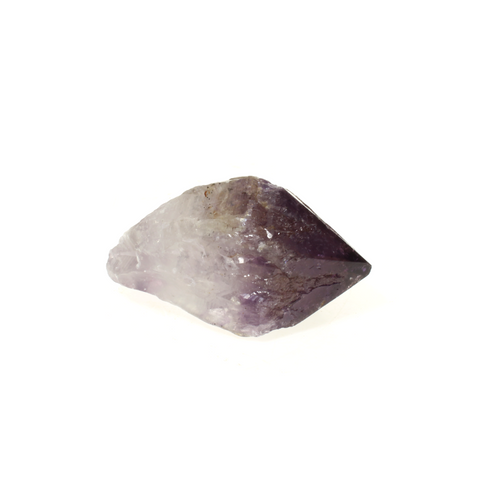
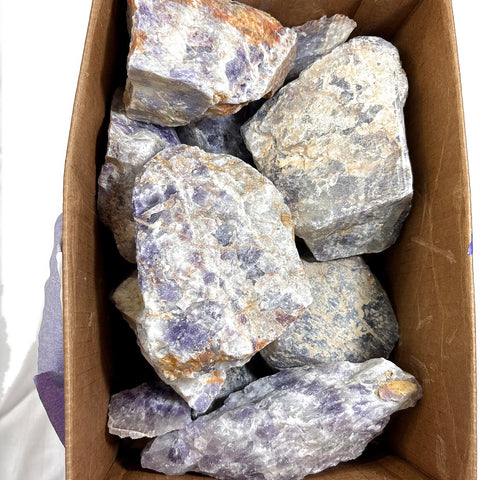
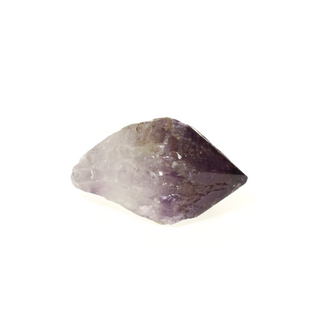
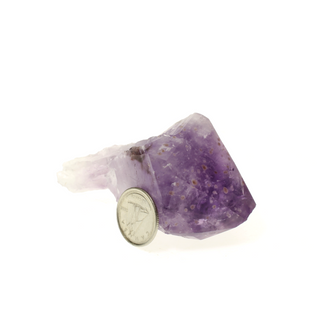
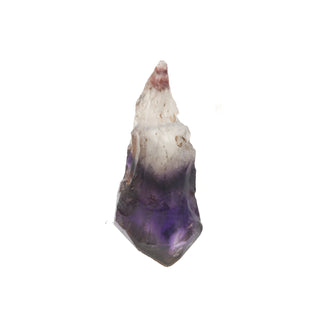
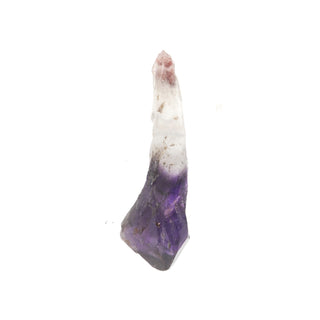
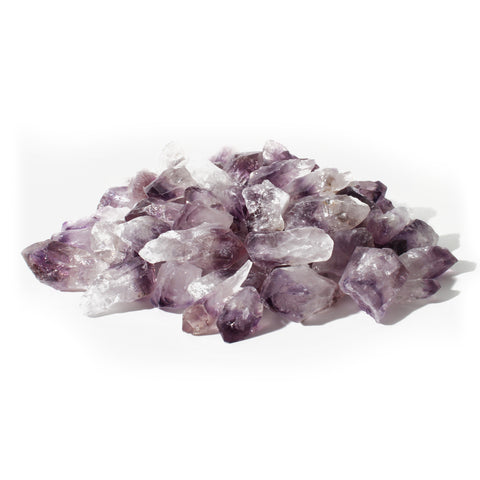
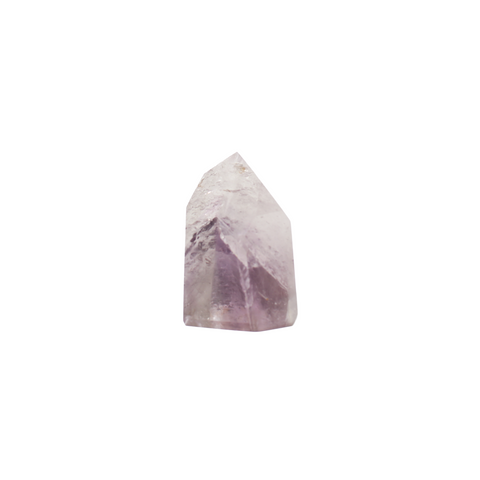
Amethyst is quartz with a trace of iron in its crystal structure. Natural radiation from the surrounding rock changes that iron so it absorbs part of the light, and the crystal looks purple. The colour is often strongest at the tips of the points, where the crystal grew last.
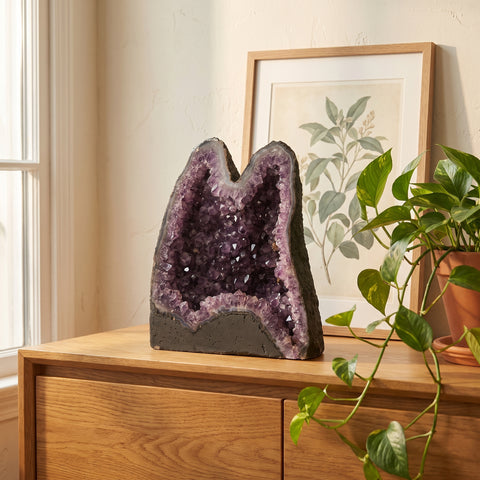
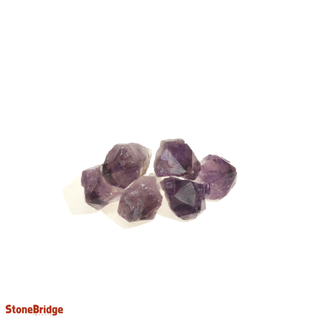
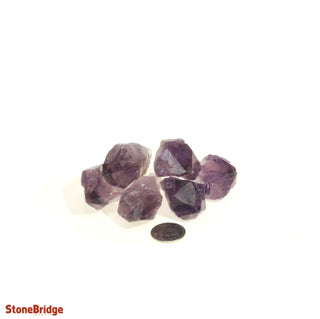
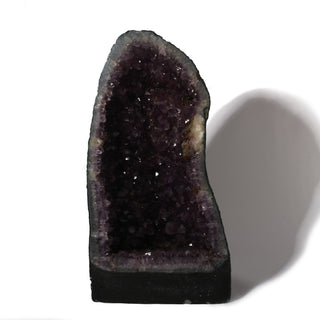
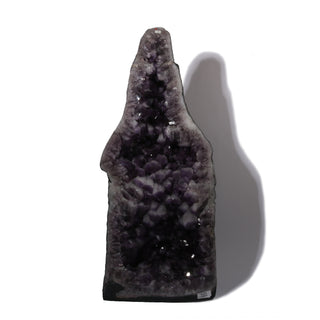
Most of the large amethyst sold in shops comes from old lava flows in southern Brazil and northern Uruguay. Gas bubbles in the cooling lava left hollows, some taller than a person, that slowly lined with quartz and then amethyst. Miners split these geodes and sell them as clusters, or stand the tall halves upright as cathedrals.
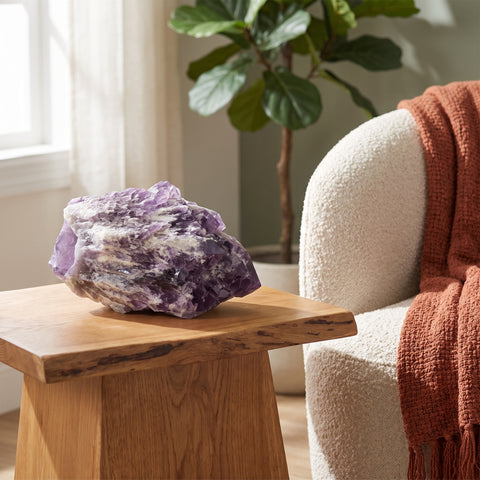
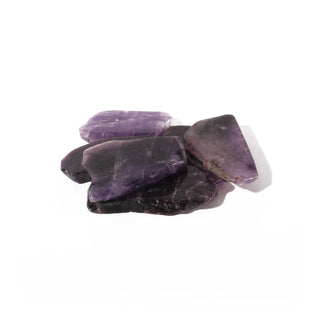
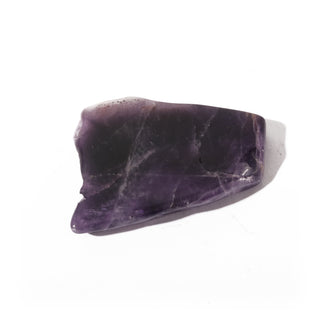
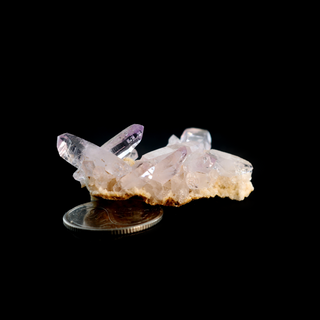
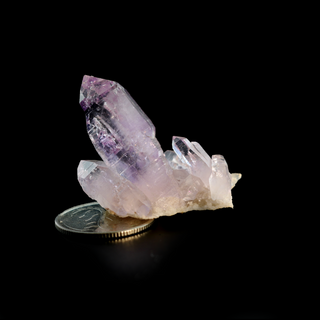
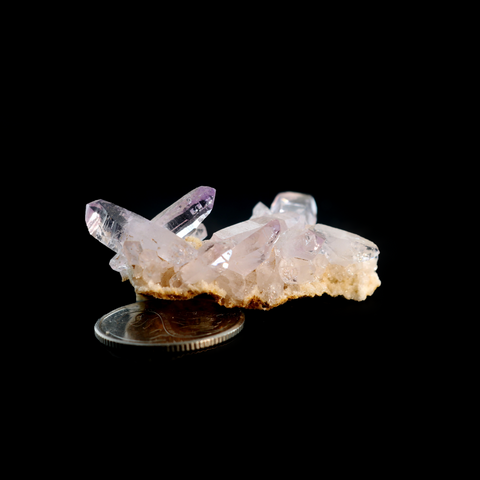
Other deposits give other looks. Vera Cruz amethyst from Mexico grows as slender, pale and very clear points. Chevron amethyst, banded with white quartz in V shapes, is cut into towers and tumbled stones. Canada has its own amethyst, mined near Thunder Bay, and it is Ontario's provincial mineral.
Heat changes amethyst. Warm it enough and the purple turns yellow to orange, which is how most citrine on the market is made. Long, strong sunlight can slowly pale it too, so the best amethyst displays are bright but out of direct sun.
Ontario's provincial mineral is amethyst, mined near Thunder Bay.