Loading
🎃 Trick or Treat: orders $200+ pick 3x Restock Cash or a free big crystal worth up to $150. Ends Oct 31. Shop

Your Cart

Your cart is empty

Get inspiration from items on sale!

WholesaleAmethyst

Purple quartz, from small points for the counter to cathedral geodes for the window.

53 Results

Amethyst Vera Cruz Cluster U#22 - 3" x 2" from Stonebridge Imports

Amethyst Vera Cruz Cluster U#22 - 3" x 2"

Retail Price: $323.00 CAD

Unit price
per 

Amethyst Ring Cluster on Iron Stand U#4 - 47kg from Stonebridge Imports

Amethyst Ring Cluster on Iron Stand U#4 - 47kg

Retail Price: $7,333.00 CAD

Unit price
per 

Amethyst Cathedral U#155 - 34.7kg from Stonebridge Imports
Amethyst Cathedral U#155 - 34.7kg    from Stonebridge Imports

Amethyst Cathedral U#155 - 34.7kg

Retail Price: $3,599.00 CAD

Unit price
per 

Ways to shop

Shop amethyst by form

Amethyst Cathedral U#182 - 82 kg
Stone notes

Amethyst: purple from iron and time

The best-known purple stone is quartz that took up a little iron and spent a very long time near natural radiation.

Amethyst is quartz with a trace of iron in its crystal structure. Natural radiation from the surrounding rock changes that iron so it absorbs part of the light, and the crystal looks purple. The colour is often strongest at the tips of the points, where the crystal grew last.

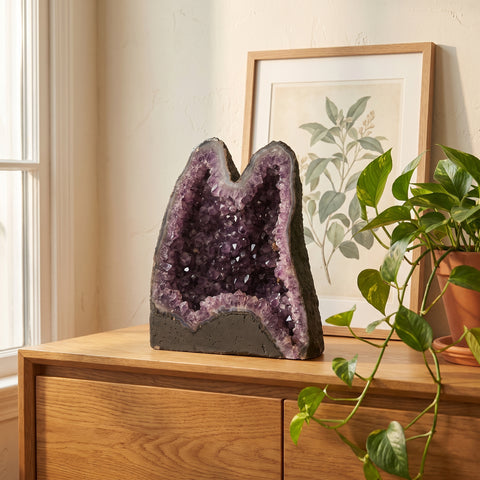
Most of the large amethyst sold in shops comes from old lava flows in southern Brazil and northern Uruguay. Gas bubbles in the cooling lava left hollows, some taller than a person, that slowly lined with quartz and then amethyst. Miners split these geodes and sell them as clusters, or stand the tall halves upright as cathedrals.

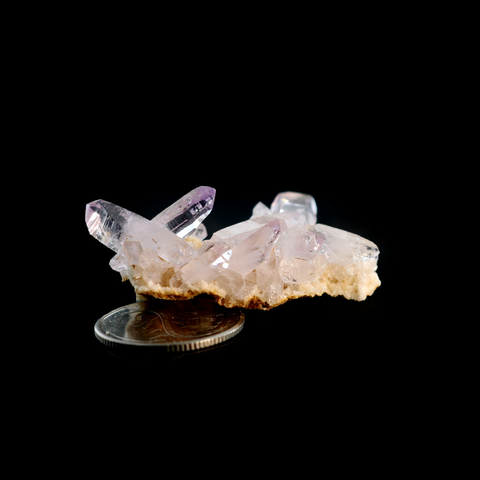
Other deposits give other looks. Vera Cruz amethyst from Mexico grows as slender, pale and very clear points. Chevron amethyst, banded with white quartz in V shapes, is cut into towers and tumbled stones. Canada has its own amethyst, mined near Thunder Bay, and it is Ontario's provincial mineral.

Heat changes amethyst. Warm it enough and the purple turns yellow to orange, which is how most citrine on the market is made. Long, strong sunlight can slowly pale it too, so the best amethyst displays are bright but out of direct sun.

Ontario's provincial mineral is amethyst, mined near Thunder Bay.
About the stone

What is amethyst?

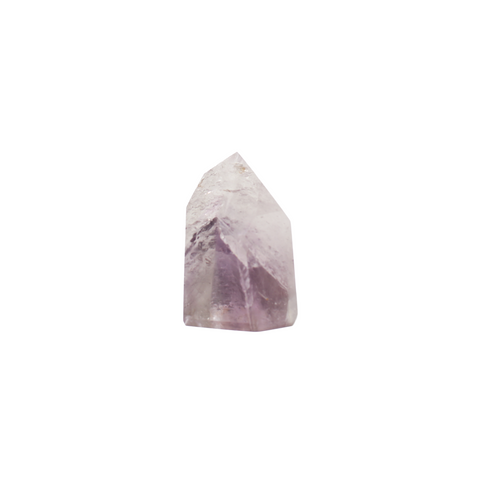
Amethyst is the purple form of quartz and one of the best-known crystals in the world. It forms as six-sided points lining the inside of volcanic geodes, which is why it is sold as clusters, single points, geodes and tall "cathedrals" as well as polished and tumbled stones.

Read more about amethyst

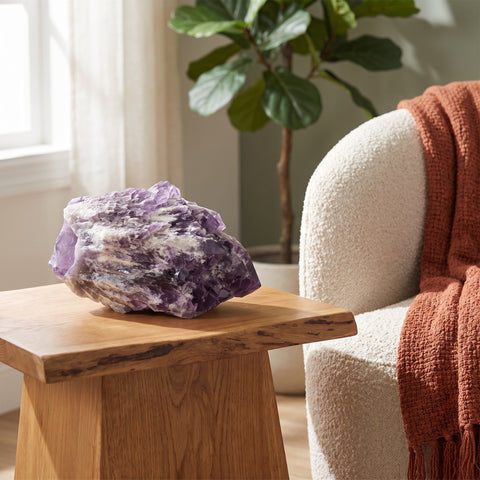
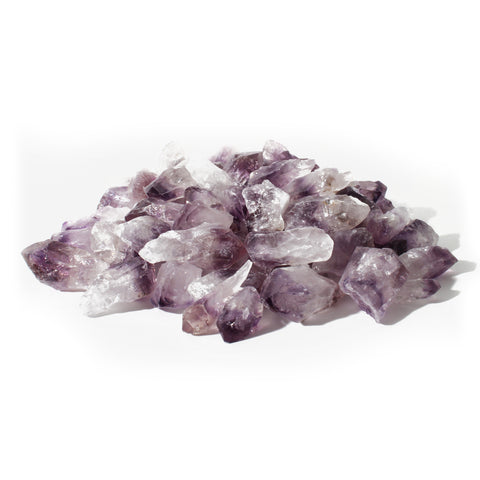
We stock amethyst for every part of a shop: small points and tumbled stones for the counter, clusters and polished pieces for display, rough amethyst for bowls and crafts, and numbered geodes and cathedrals for a window. Numbered pieces are photographed on their own, so you get the piece you see.

Reading our titles

The letter in a title (A, B or E) is the quality grade of that lot. "Unique #" or "U#" marks a one-of-a-kind piece with its own photos and size.

Mineral
Quartz (silicon dioxide), the purple variety
Hardness
7 on the Mohs scale
Colour
Lilac to deep purple. Iron in the crystal plus natural radiation in the ground makes the colour
Habit
Six-sided points, usually grown together as clusters inside geodes
Main sources
Brazil and Uruguay (geodes and cathedrals), Zambia, Madagascar. Canada has amethyst too, near Thunder Bay, Ontario
Varieties

Kinds of amethyst we stock

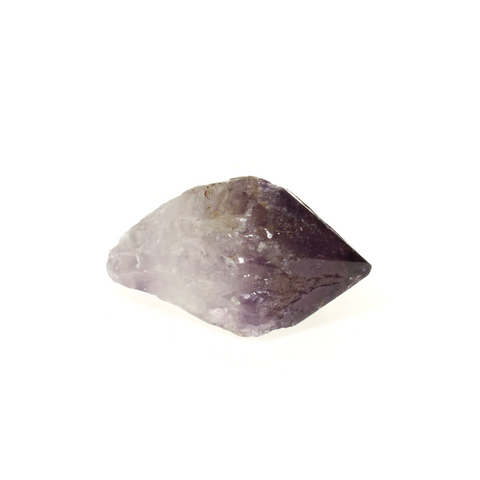
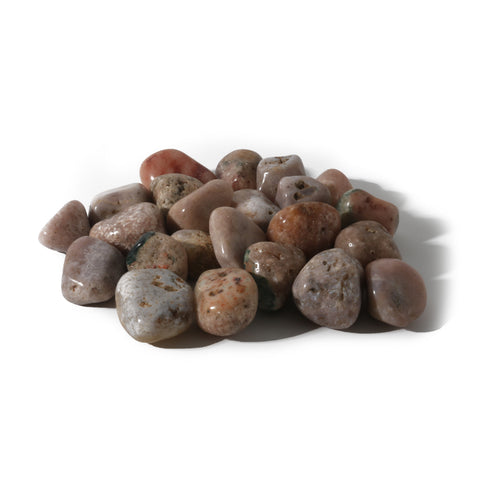
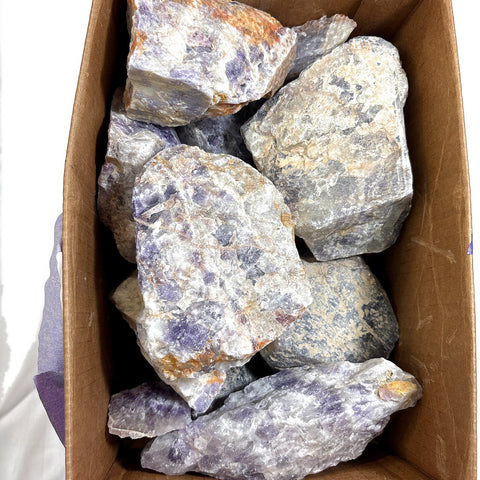
Photos are real pieces from our stock. Tap a variety to see what is in stock now.

In crystal traditions

What amethyst is traditionally used for

The name comes from the Greek "amethystos", meaning "not drunk". It is February's birthstone, and in crystal traditions it is the stone of calm, sleep and clear thinking.

CalmSleepIntuitionBalanceChakra: Third eye, CrownZodiac: Pisces, Aquarius

Traditional associations, shared as folklore. They are not health or medical claims.

Choosing stock

Which amethyst for which shelf

Amethyst comes in more forms than almost any other stone. This is where each one tends to sell.

FormWhat it isWhere it sells best
PointsSingle crystalsCounter jars and window sills
ClustersGroups of points on a shared baseDisplay shelves and gift tables
Geodes and cathedralsWhole or half hollow nodules lined with crystalsWindows, entrances, statement corners
Chevron towersBanded amethyst and white quartz, cut and polishedEye-level shelves next to clear quartz
Tumbled and chipsSmall polished or rough piecesBowls by the till and craft corners

Real, treated or fake?

  • Natural amethyst has colour zones, often darker at the tips of the points and paler toward the base. Perfectly even purple all through can mean glass or synthetic material.
  • Most yellow-orange "citrine" clusters on the market are amethyst that was heated. They are real quartz but the colour is from heat, and our listings say when a piece is heat-treated.
  • Glass imitations show round bubbles and swirl lines under a loupe and have no natural crystal faces.

Care and cleaning

  • Long exposure to strong sunlight can fade amethyst. Keep window displays out of full sun.
  • Dust clusters with a soft brush; rinse with lukewarm water only if needed and dry fully.
  • Cathedrals and large geodes are heavy and top-heavy; display them on a flat, stable base.

How shops sell amethyst

  • Small points and tumbled amethyst move fastest at the counter. Clusters and cathedrals are the eye-catchers that bring people in.
  • Light makes amethyst sell. A small spotlight or a lit shelf shows the purple; dim corners make it look grey.
  • Group by price on one shelf (points, small clusters, then one statement geode) so customers can trade up.
  • February (birthstone month) and the holiday season are the strongest months.
Apply for wholesale pricing
On the shelf

How to display amethyst

Amethyst needs light to look purple, but not direct sun.

  1. Bright, not sunnyA spotlight or an LED shelf strip shows the purple. Direct afternoon sun can fade it, and dim corners make it look grey.
  2. One big piece at the doorA single cathedral or large cluster near the entrance stops people walking past.
  3. Points in a size ladderJars of points from small to large let customers trade up without asking.
  4. The classic trioAmethyst next to clear quartz and rose quartz is the most familiar crystal display there is. Use it.
Questions

Amethyst FAQ

Is your amethyst natural?

Amethyst is natural purple quartz. If a piece in our shop is enhanced (for example heat-treated) or man-made, its title and description say so.

Where does your amethyst come from?

Each listing shows the country of origin. Large geodes and cathedrals mostly come from Brazil and Uruguay.

Do you sell amethyst without a minimum order?

Yes. There is no minimum order. Approved wholesale customers see their wholesale price on every product once signed in.

Will amethyst fade in my window?

It can fade over months of strong direct sun. Indoor light is fine.

What is an amethyst cathedral?

A cathedral is a tall amethyst geode, cut or broken open along its length and stood upright, so the crystal-lined hollow faces you like an arch. Most come from Brazil and Uruguay.

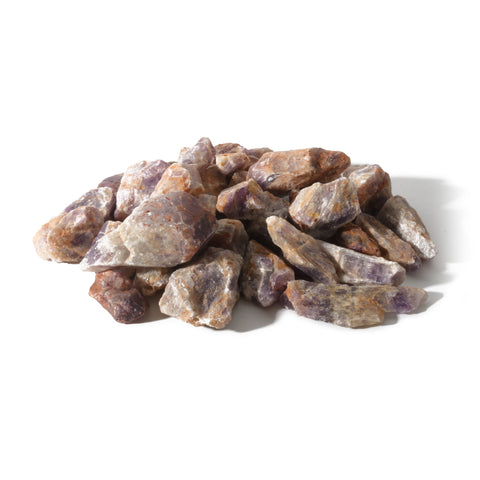
Is there Canadian amethyst?

Yes. Amethyst has been mined near Thunder Bay, Ontario, and it is Ontario's provincial mineral. It is often a reddish purple because of hematite near the crystal surfaces.