


Tiger's eye: light that moves
A band of light slides across the stone as you turn it. The effect comes from millions of fibres locked in quartz.
Tiger's eye is quartz with a secret inside. Running through it are fine, straight fibres of crocidolite, a blue mineral of the amphibole family. Over time the iron in those fibres altered to golden brown iron oxides, and quartz grew around and between them. The fibres are sealed inside hard quartz, so polished tiger's eye is solid and smooth.
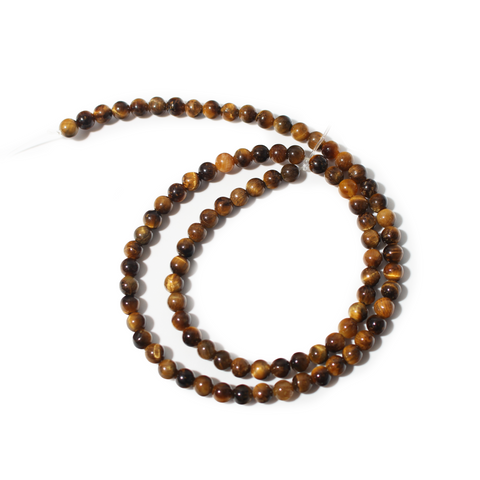
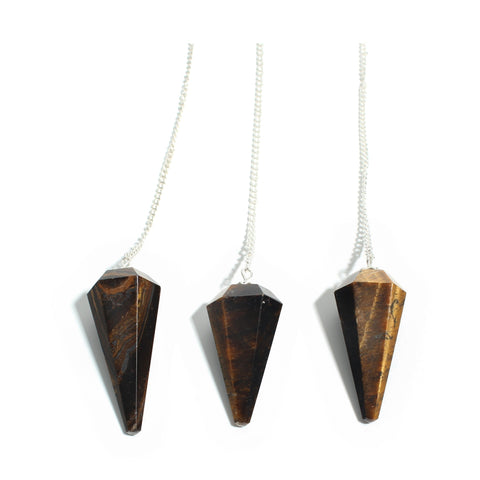
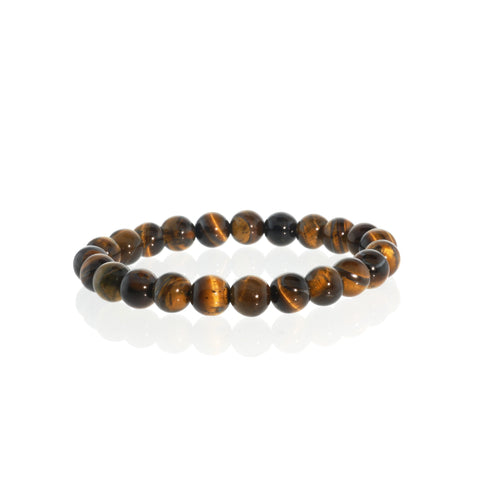
Those parallel fibres catch light and send it back as a bright silky band. Turn the stone and the band rolls across it, an effect called chatoyancy, from the French word for a cat's eye. Cutters shape tiger's eye into rounded beads and cabochons with the fibres running flat, so the band shows at its best.
Colour tells the history of the stone. Where the fibres stayed unaltered, the stone is blue-grey and is sold as hawk's eye. Where the iron changed fully, it is gold. Red tiger's eye is usually gold tiger's eye that has been gently heated, which turns the iron oxides red. The change is permanent and widely accepted, but it is still a treatment.
South Africa has been the classic source for well over a century. For a shop, tiger's eye is one of the most recognised stones at any counter. People ask for it by name, it suits men's and unisex jewellery, and it is hard enough to wear every day.
Turn the bead and the light rolls across it. That moving band is what customers fall for.