












Agate: the banded stone
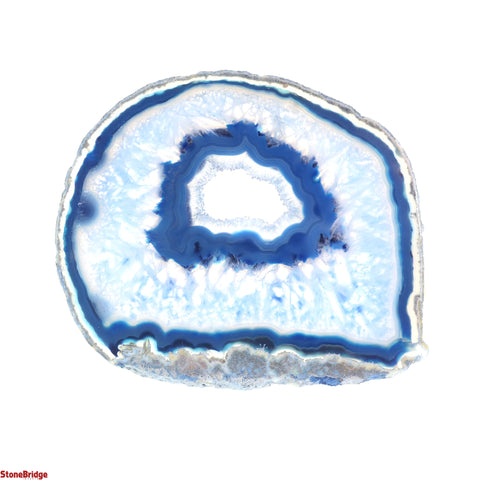
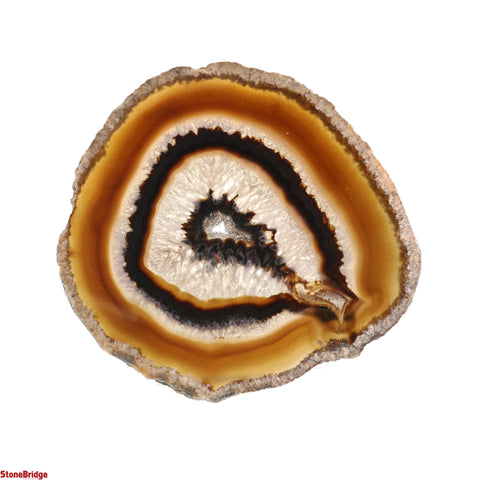
Every slice is a record of a hollow in old volcanic rock filling up, one thin layer of silica at a time.
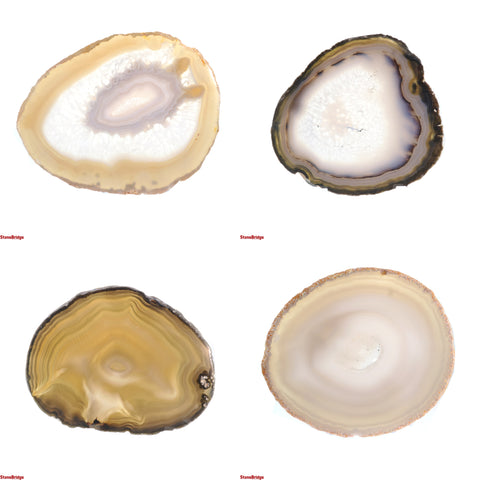
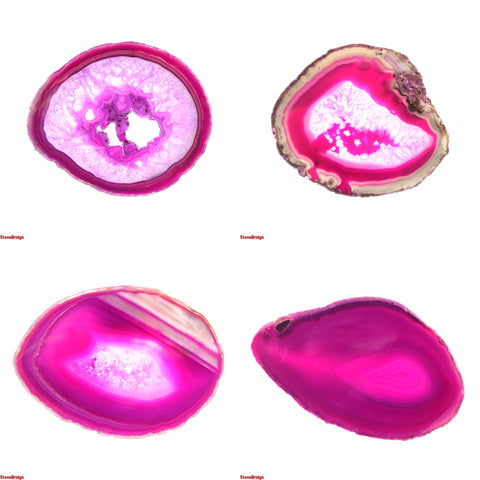
Agate starts as an empty space, usually a gas bubble trapped in cooling lava. Over a very long time, groundwater carrying dissolved silica seeps in and leaves thin coats of chalcedony on the walls, a quartz so fine-grained that its crystals can only be seen under a microscope. Small changes in the water and in impurities such as iron give each coat a slightly different colour, and the stack of coats becomes the bands you see when a nodule is cut open.
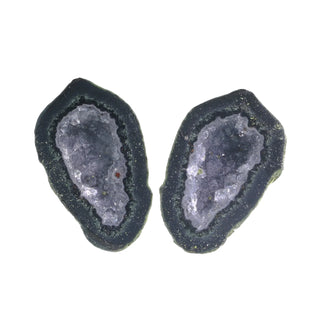
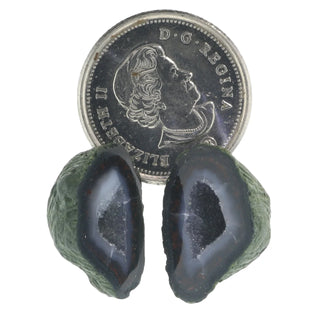
If the hollow never fills completely, the last layers grow as small quartz crystals in the centre. That is the sparkling cavity in an agate geode and the crystal "eye" in the middle of many slices. A hollow that seals before it fills can even keep a little of the original water inside, which is what an enhydro agate is.
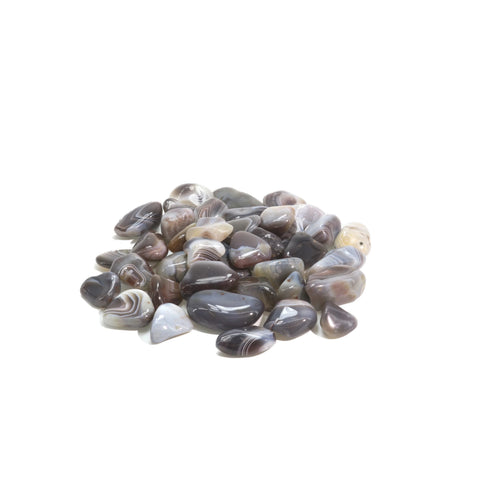
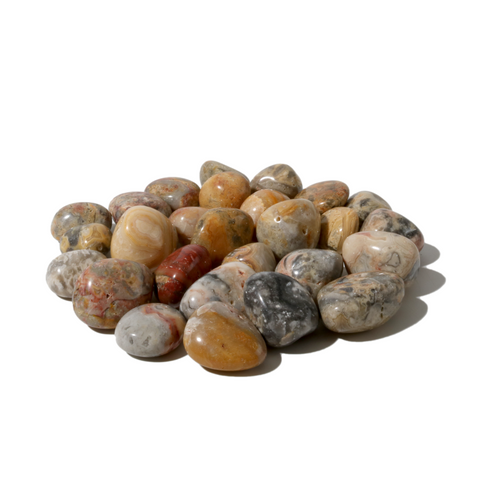
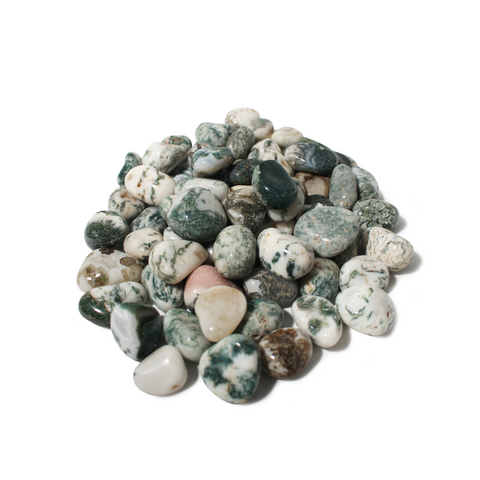
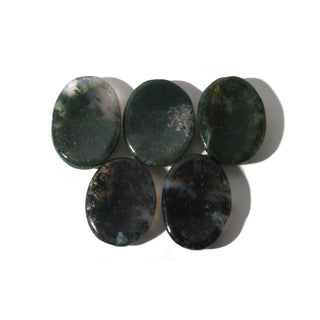
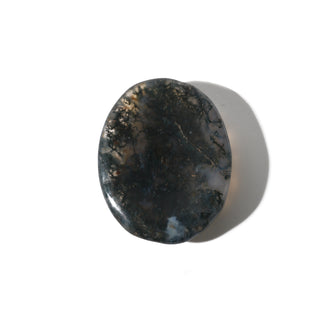
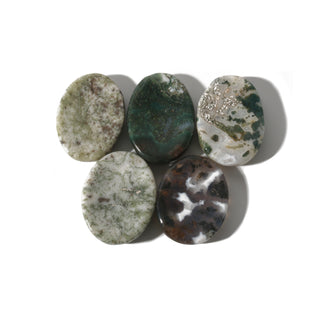
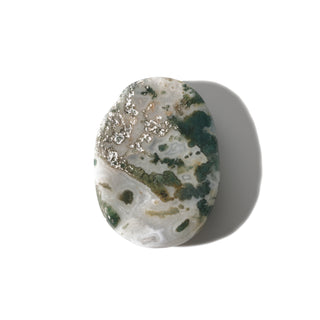
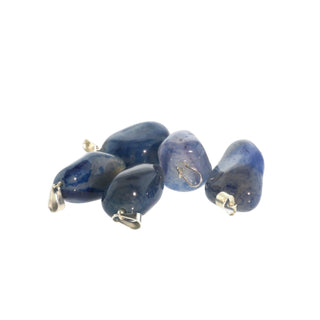
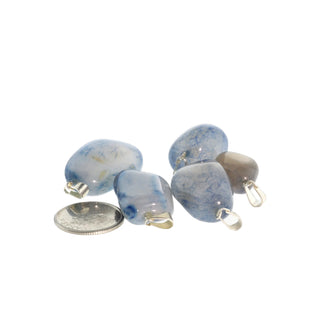
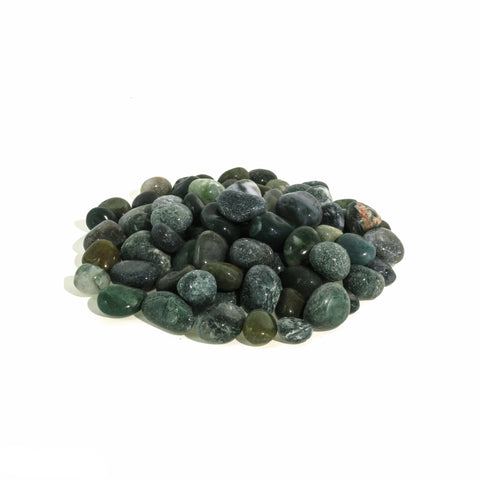
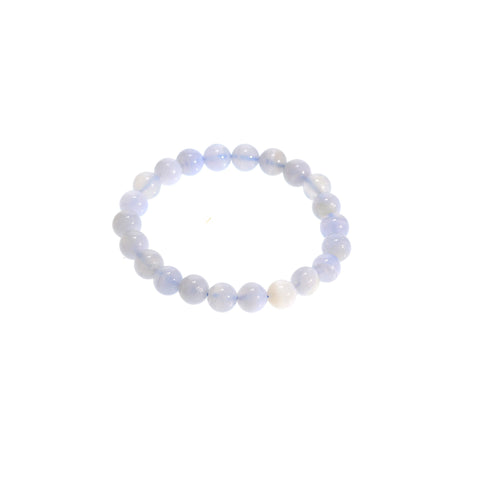
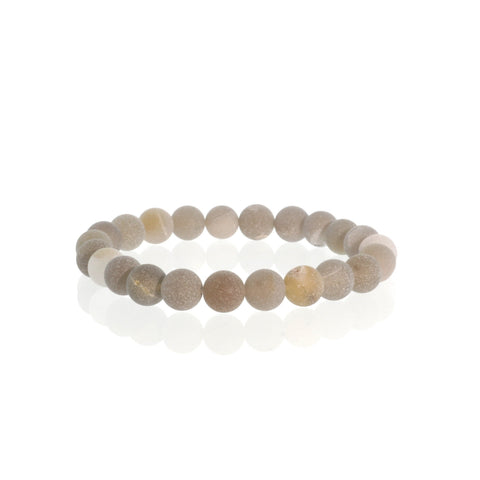
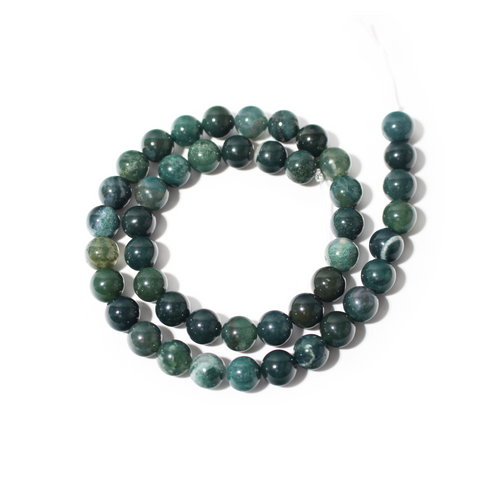
Because the pattern depends on local water and rock, agate from one place rarely looks like agate from another. Botswana agate is known for fine grey and pink banding, Mexican crazy lace agate for tight swirls, and blue lace agate from southern Africa for soft blue and white lines. Moss and tree agate bend the rule. They are chalcedony with green mineral growths inside instead of bands, but the trade has called them agate for a very long time.
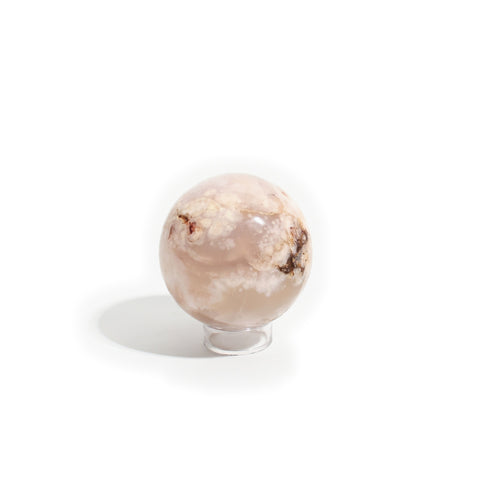
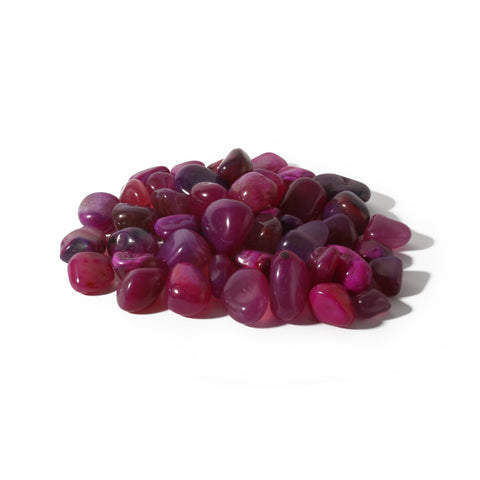
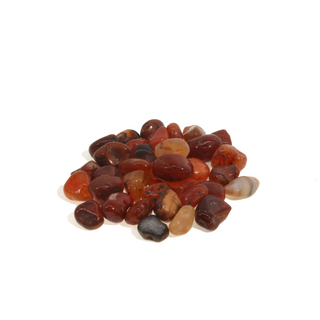
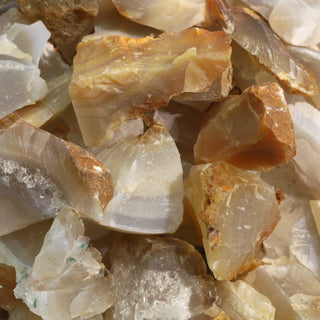
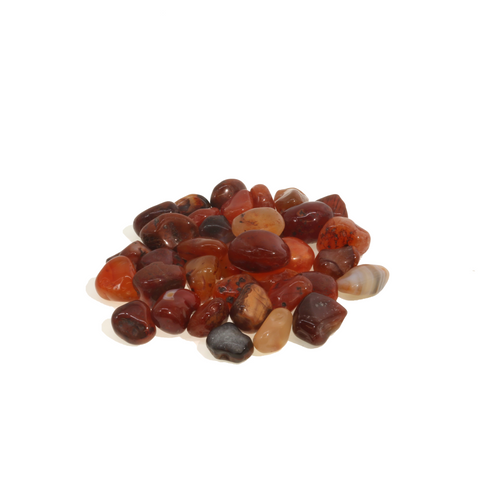
For a shop, that variety is the point. Agate is hard enough to tumble, slice, carve and drill, it is mined in large amounts, and it fits every price point, from a scoop of tumbled stones to a polished sphere or a slice for the window.
No two slices match. Every band is a record of the water that once moved through the stone.