


Lemurian quartz: a quartz point with a story
The ridges are real mineralogy. The lost continent is modern crystal lore. Both help it sell.
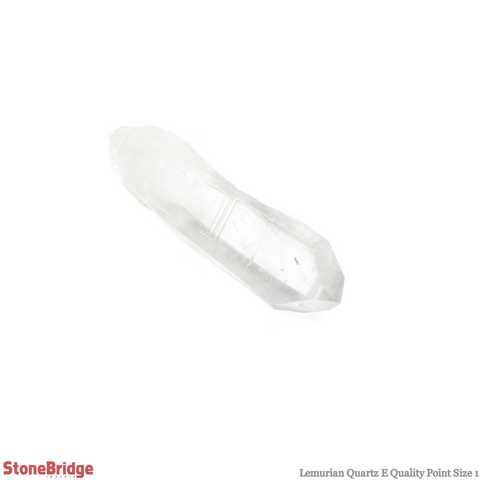
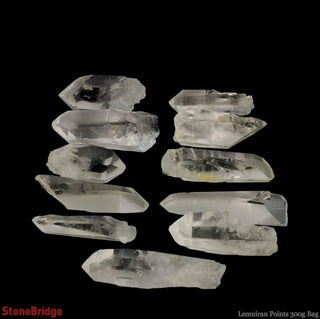
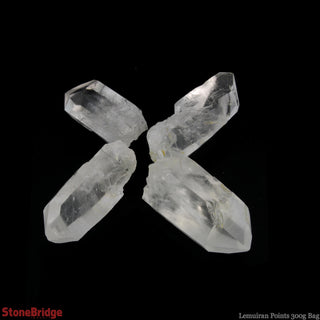
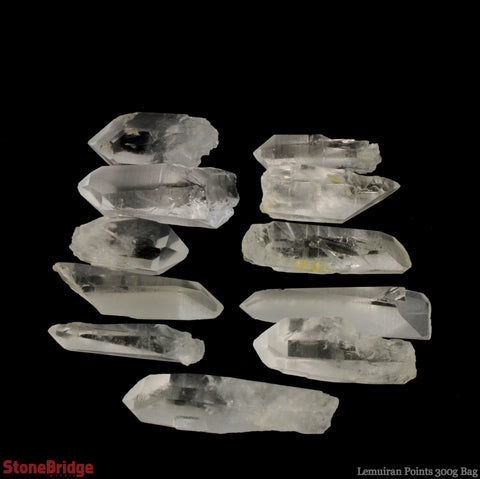
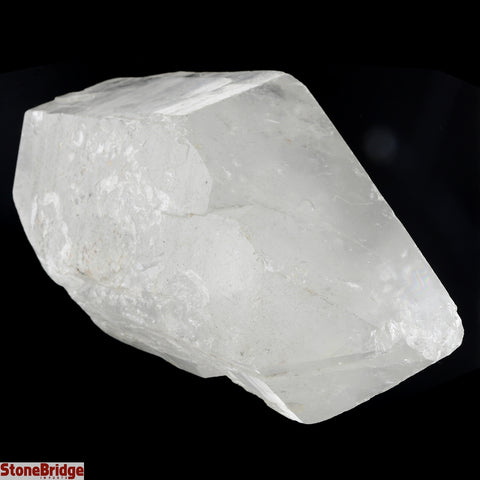
A Lemurian point is clear quartz. Same chemistry, same hardness, same six-sided prism ending in a point. What sets it apart is the surface. Some of its faces carry deep horizontal ridges, stacked one above the other like the rungs of a ladder. In the crystal trade those ridges are often called bar codes or record keepers' lines.
Striations like these are normal in quartz. They form as the crystal grows in steps, switching back and forth between the faces of the prism and the faces of the tip. On most quartz they are faint. On points sold as Lemurian they are strong and easy to feel with a fingernail, and the points are often long, slim and frosted on some faces.
The name comes from Lemuria, a lost land first proposed by nineteenth-century scientists to explain why lemur fossils turned up in both Madagascar and India. Plate tectonics later explained that without a sunken continent, but the idea lived on in esoteric writing. In the 1990s the crystal trade began calling these ridged Brazilian points Lemurian, and a modern story grew up around them.
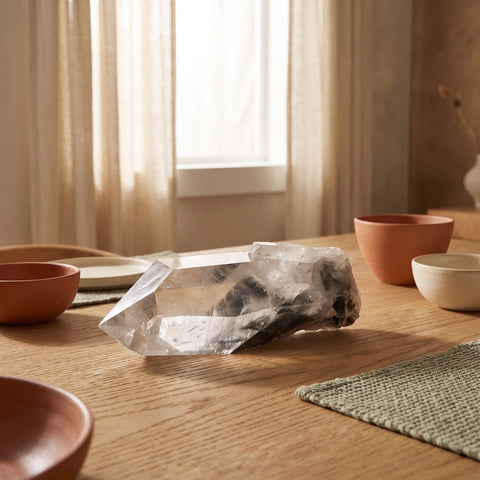
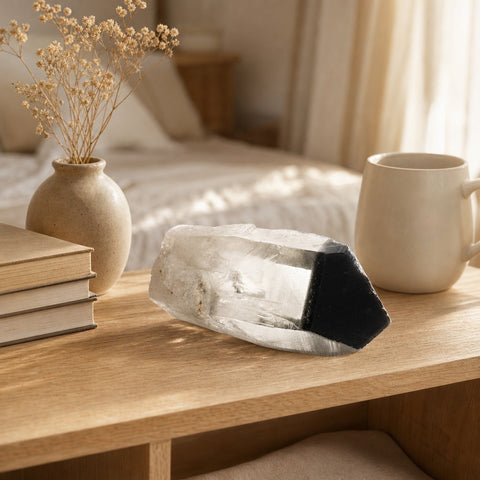
For a shop, it is worth being clear about both halves. Customers who love the lore will look for the name. Customers who want plain facts will be glad to hear it is natural quartz with unusual growth lines. Our black phantom points add a third angle, a dark outline of an earlier tip trapped inside the crystal.
Every Lemurian point is real quartz. The ladder on its side is how it grew.