





Aventurine: named after a happy accident
The stone took its name from a glass, and the glass took its name from a mistake in a Venetian workshop.
Aventurine is not a single crystal. It is a rock made of tightly packed quartz grains, with small flat flakes of other minerals spread through it. When light catches those flakes the stone glitters softly. That glitter is called aventurescence.
The name comes from the Italian "a ventura", meaning by chance. The story goes that glassmakers in Venice dropped copper filings into molten glass by accident and got a glittering glass, now called goldstone. When a natural stone with the same sparkle turned up, it borrowed the name. Today goldstone and aventurine are still sold side by side, and still confused.
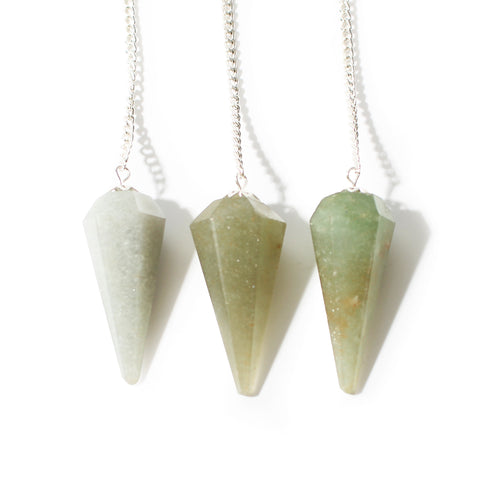
The colour depends on the flakes. Green aventurine, by far the best known, owes its colour to fuchsite, a green mica that contains chromium. Red and peach aventurine get theirs from iron oxides such as hematite. Blue and grey aventurine take their colour from other mineral inclusions in the quartz.
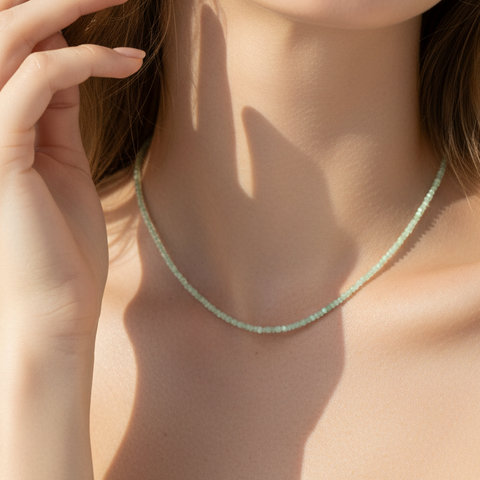
For a shop, aventurine is a workhorse stone. It is hard enough for beads, bracelets and tumbling, it takes a good polish, and green aventurine is one of the stones customers ask for by name.
Goldstone is the glass that gave aventurine its name. Aventurine is the natural stone that sparkles like it.

