

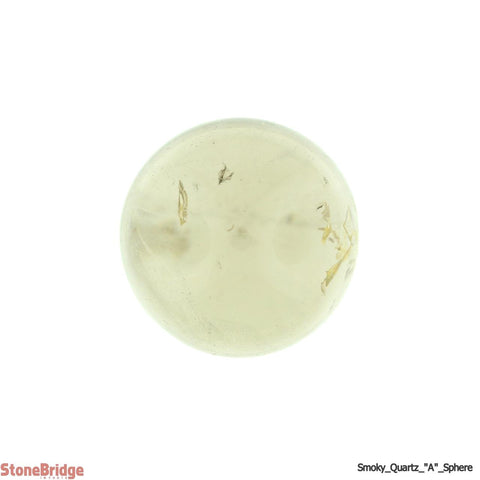

Smoky quartz: clear quartz, darkened by the earth
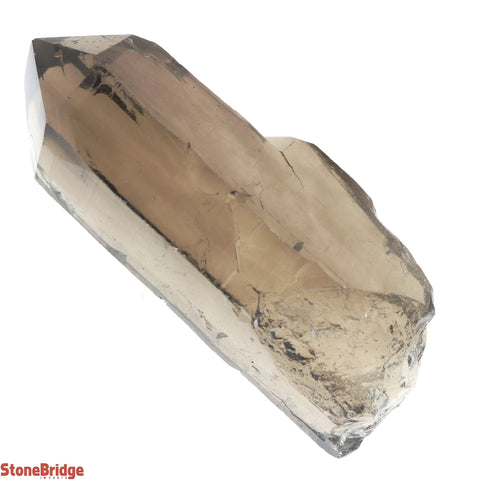
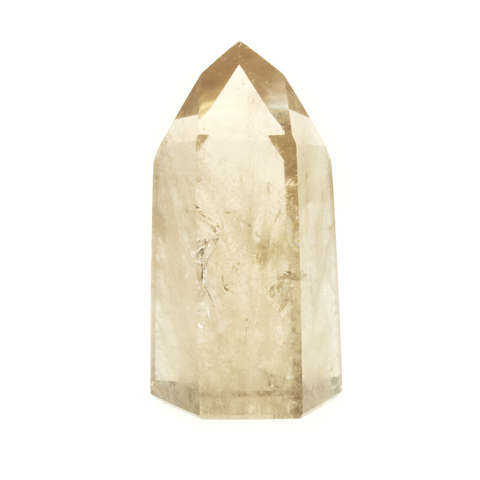
The same mineral as a clear point, coloured over a very long time by the faint natural radiation in the rock around it.
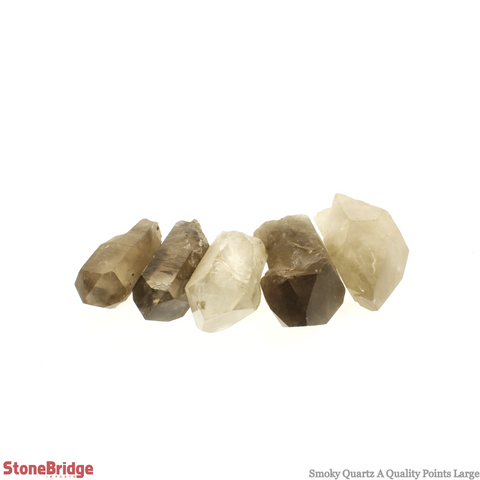
Smoky quartz starts out as ordinary quartz. Tiny amounts of aluminium sit in place of silicon in its crystal structure, and over a very long time natural radiation from the surrounding rock, often granite, changes those spots so they absorb light. The more change, the darker the crystal, from pale tea-brown to the near-black variety called morion.
That colour is stable in a room, but heat takes it away. Strongly heated smoky quartz turns pale or clear again, which is one reason some smoky crystals from the same pocket are lighter than others.
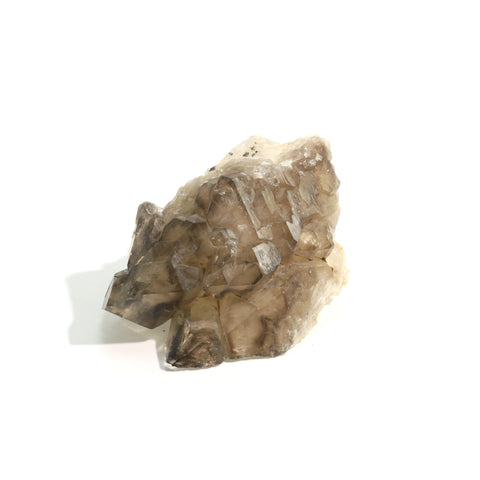
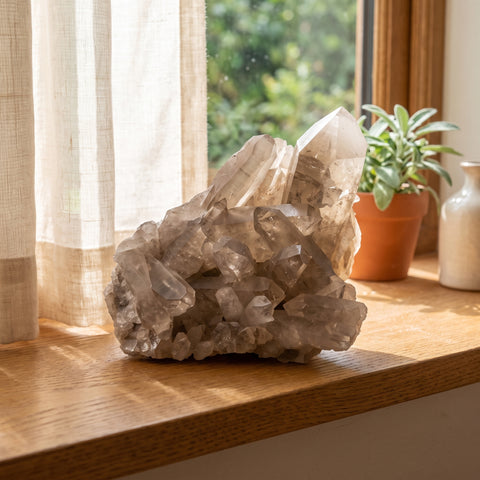
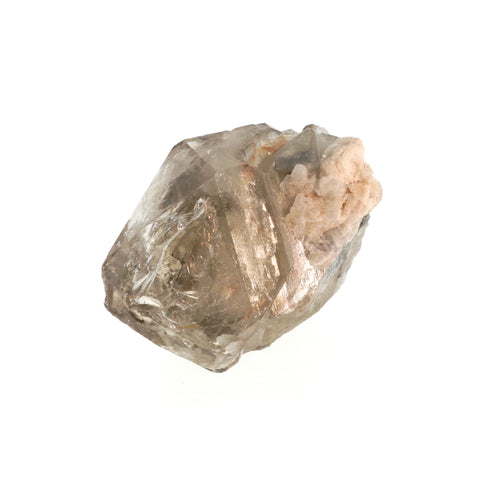
Smoky quartz grows in the same shapes as clear quartz. Single points, clusters on a shared base, and elestials, crystals that grew in layers and steps so the faces look like a stack of tiny terraces. It is found on several continents. Scotland's Cairngorm mountains gave one name to it, and the Alps, Brazil, Madagascar and Malawi are all known sources.
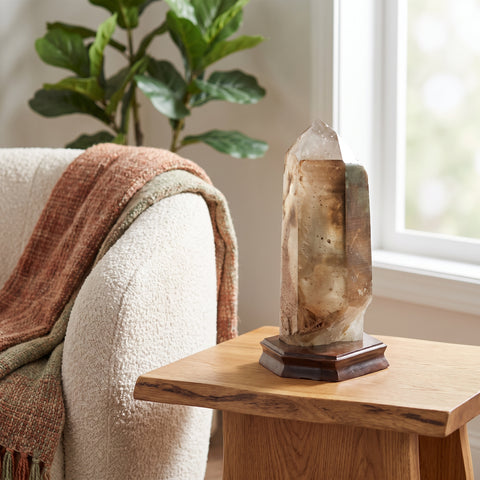
For a shop it is the earthy counterweight to amethyst and clear quartz. The colour suits wood and stone interiors, and the large clusters and points on wooden bases are some of the most striking pieces we sell.
Every smoky crystal is a clear one that spent a very long time in the dark.