

Unakite: granite that turned pink and green
Unakite started as ordinary granite. Hot fluids moving through it turned part of the rock green, and left the rest pink.
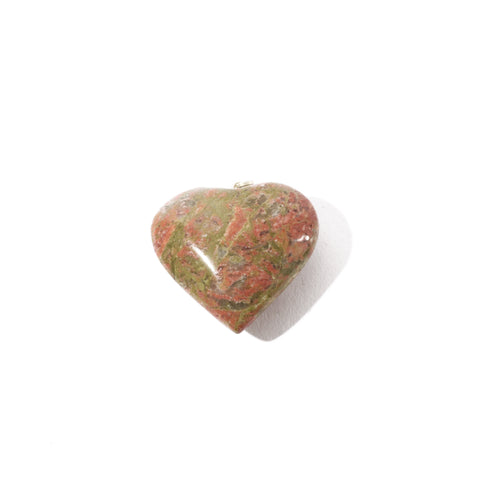
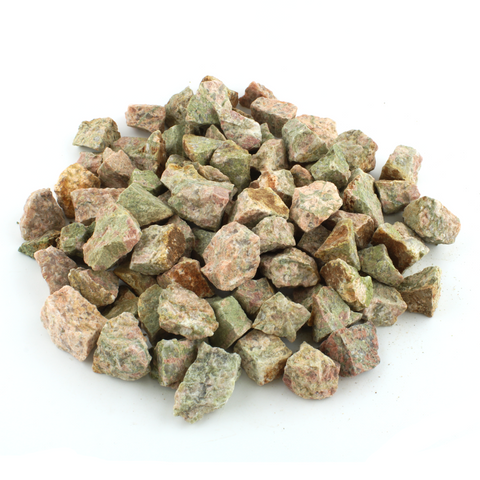
Unakite is a rock, not a mineral. It began as granite, a mix of feldspar, quartz and darker minerals. Hot, mineral-rich water later moved through the rock and changed some of it into epidote, a green calcium aluminium silicate. What was left is a mottled stone of pink feldspar, green epidote and grains of quartz. Geologists call this kind of change hydrothermal alteration.
It takes its name from the Unaka Mountains on the border of North Carolina and Tennessee, where it was first described in the 1870s. It is also found along the Blue Ridge in Virginia, around the Great Lakes, and in South Africa, Brazil and China. Pebbles of unakite turn up on some Great Lakes beaches, a fun fact for Ontario customers.
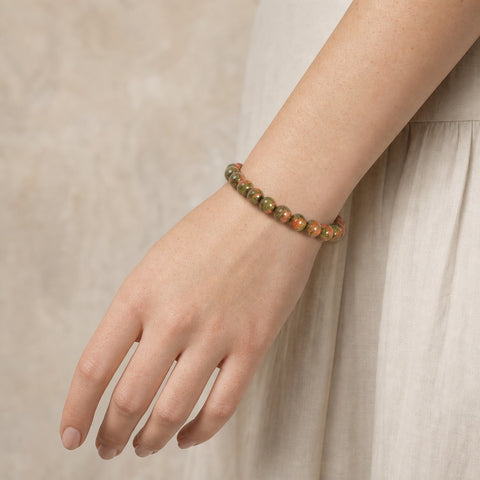
Because it is granite at heart, unakite is tough. It sits at 6 to 7 on the Mohs scale, takes a good polish and can be drilled, carved and cut into beads without much waste. The pink and green are natural and are not dyed, which is a selling point in a market full of dyed stone.
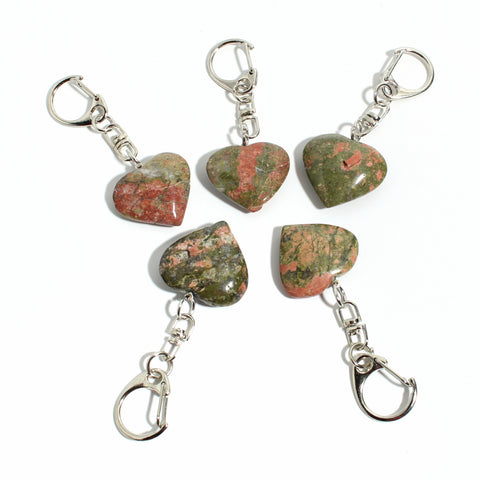
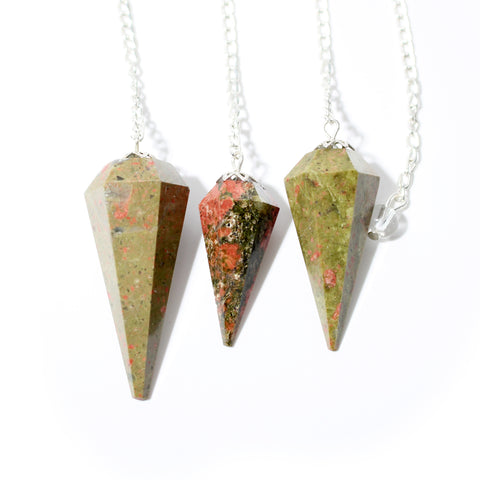
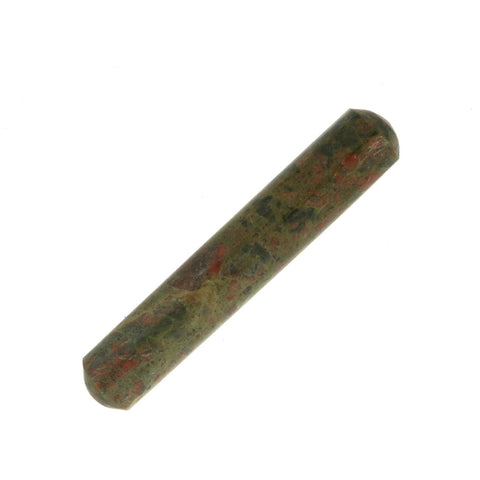
Every piece has its own balance of colour. Some are mostly green with pink spots, others mostly pink with green swirls. For a shop that variety is useful. Customers like to choose their own heart or pendant, so a small tray with a dozen pieces sells better than one sample.
No two pieces have the same mix of pink and green, and none of it is dyed.