






Jasper: a stone of many names
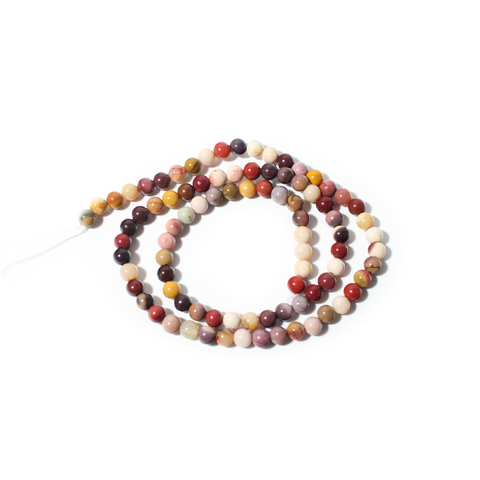
Red, yellow, spotted, orbed or painted with scenes. Jasper is quartz that took on whatever minerals were around when it formed.
Jasper is one of the oldest stone names in use. The word reached English through Latin and Greek from older languages of the eastern Mediterranean, and carved jasper seals and beads turn up in very old archaeological sites. Its appeal has always been the same. It is hard, it takes a good polish, and no two pieces look alike.
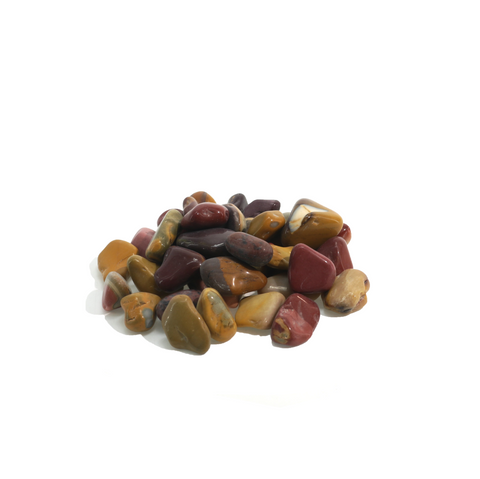
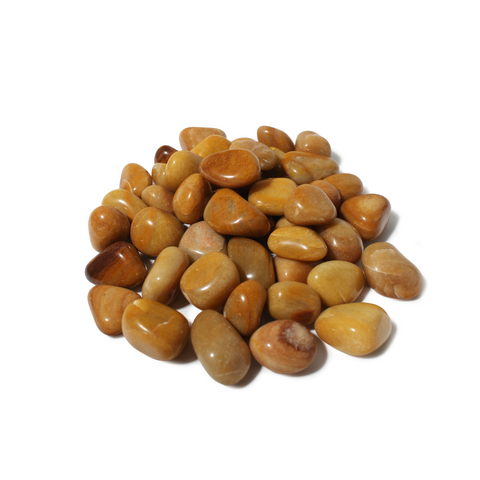
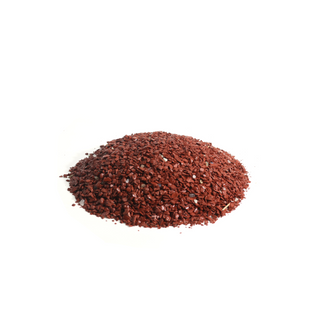
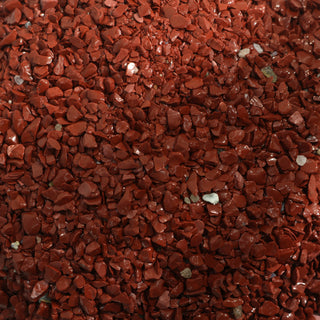
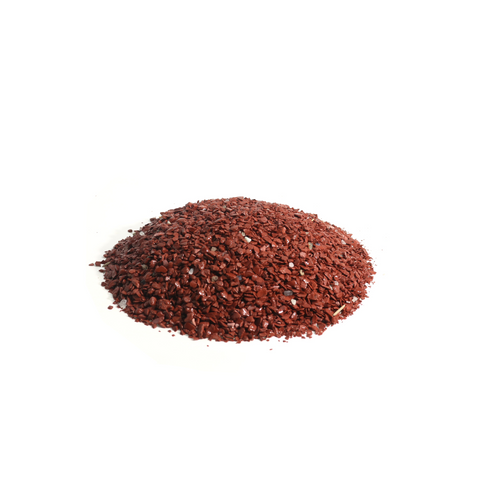
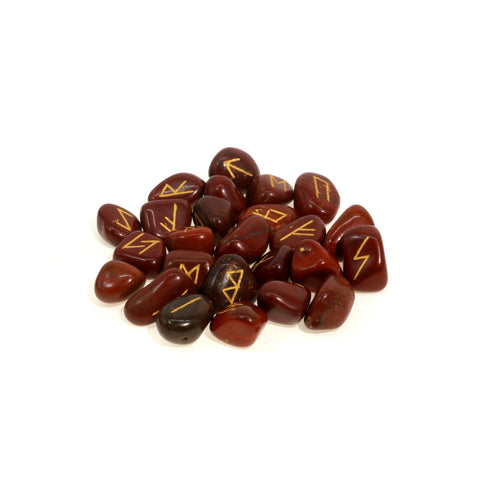
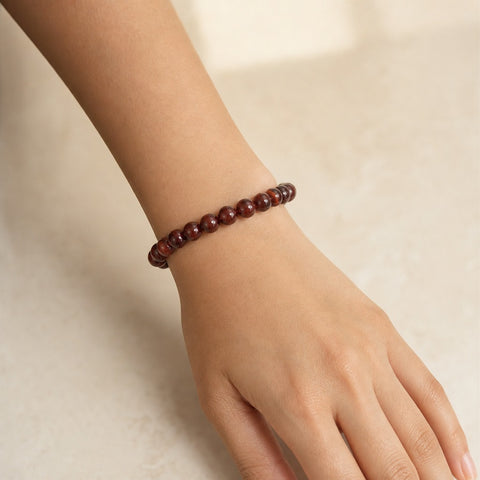
Mineralogically, jasper is microcrystalline quartz, the same family as agate and chalcedony. The difference is what else is mixed in. Jasper can carry a large share of other material, mostly iron oxides and clay, and that is what makes it opaque. Hematite gives the brick and blood reds, goethite and limonite the mustard yellows and browns.
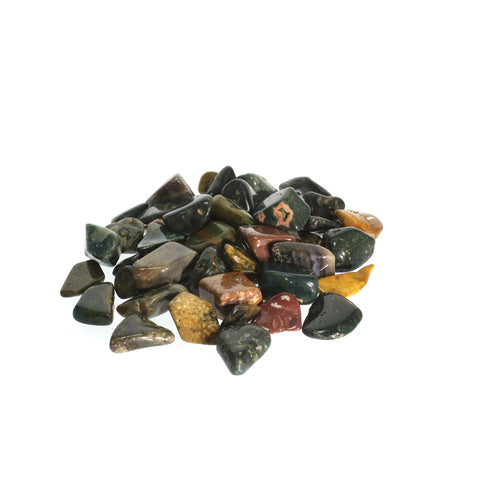
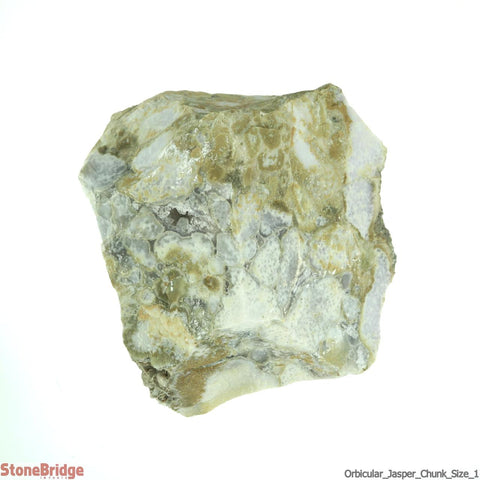
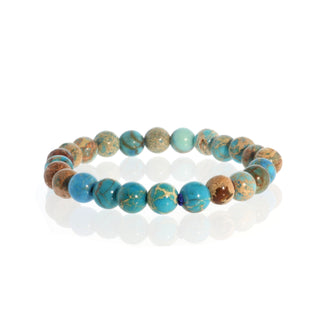
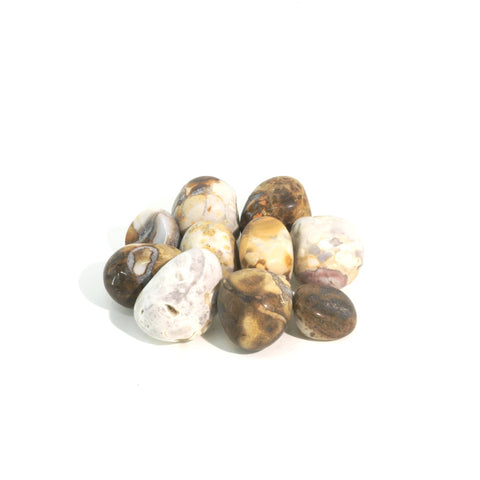
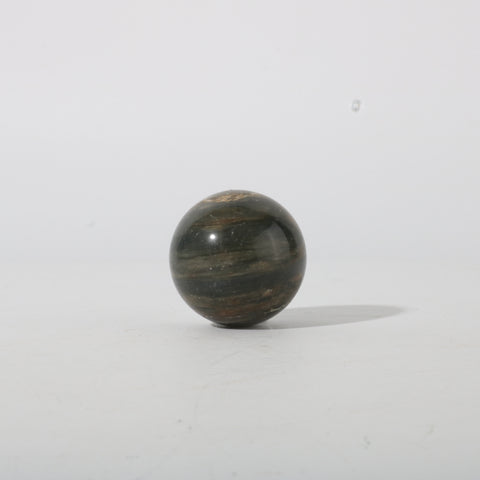
The patterns record how each jasper formed. Brecciated jasper was shattered and then cemented back together by new silica. Ocean jasper, from the coast of Madagascar, grew tiny spheres of chalcedony that show as orbs and eyes when it is cut. Picture jasper laid down fine layers of sediment that read like a desert landscape.
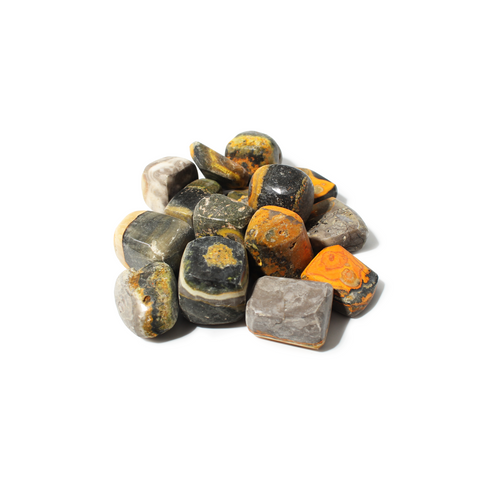
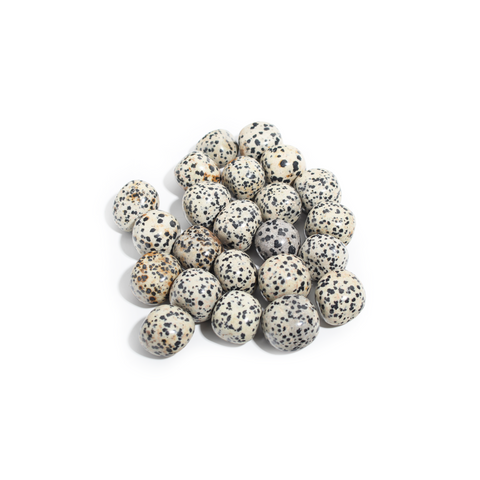
The name is also used loosely. Dalmatian, leopardskin and bumble bee jasper are other rocks that the trade calls jasper because they look the part. They are still good stones to sell, but it helps to know what you have. The table further down sorts the names on our labels.
The best jasper looks like a painting no one made.