


Onyx: one name, two stones
The black stone in rings and beads is dyed chalcedony. The glowing stone in lamps is banded calcite. Both are sold as onyx.
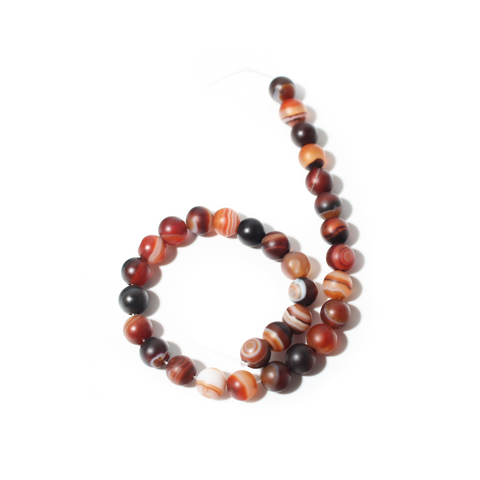
To a mineralogist, onyx is chalcedony, the same fine-grained quartz as agate, with bands that run straight and parallel instead of curving. Classic onyx has black and white layers. When the layers are brown-red and white it is called sardonyx, after sard, the brown-red form of chalcedony. Cameo carvers have used those contrasting layers for centuries, cutting a white figure out of a dark background.
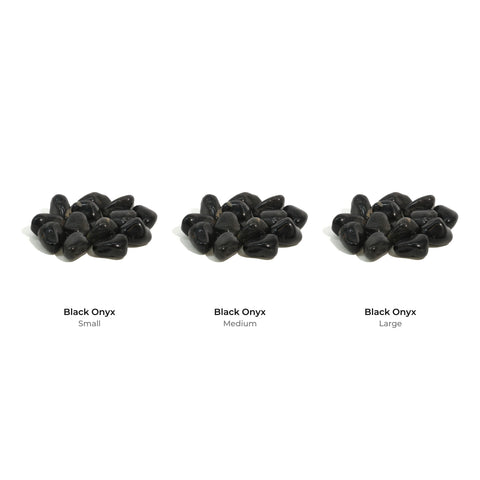
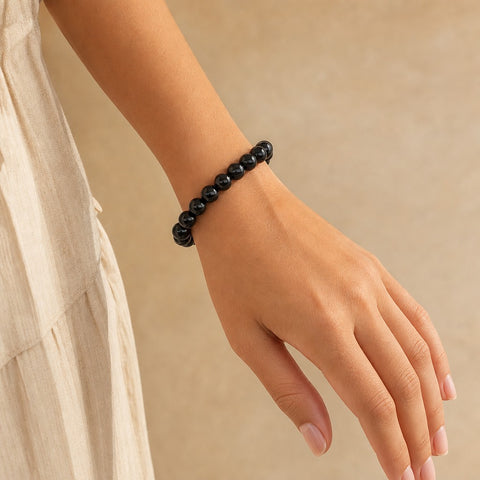
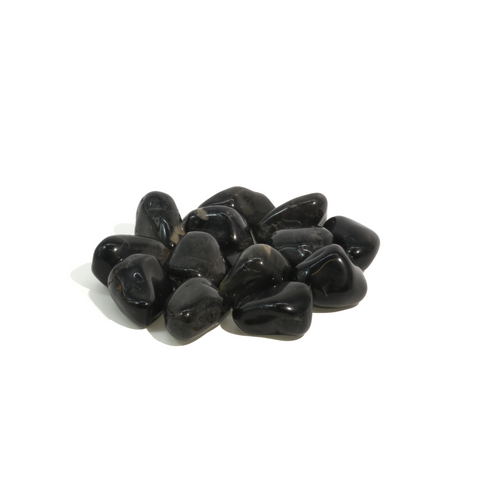
Most black onyx sold today is not naturally black. Grey chalcedony and agate take colour well, and dyeing them black is a practice that goes back to Roman times. Older methods soaked the stone in sugar and then acid to leave carbon in the pores; modern dyes do the same job. The result is stable and permanent, but it is a treatment, and an even jet black is the sign of it.
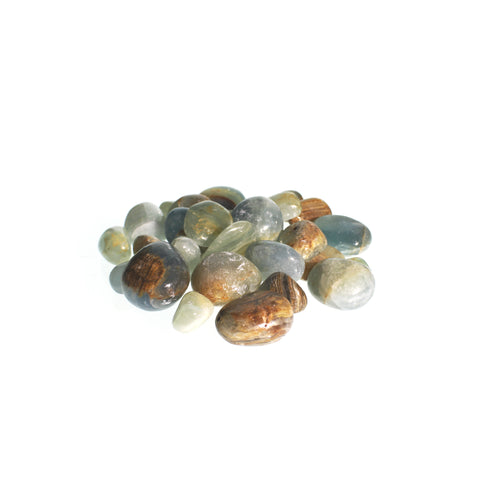
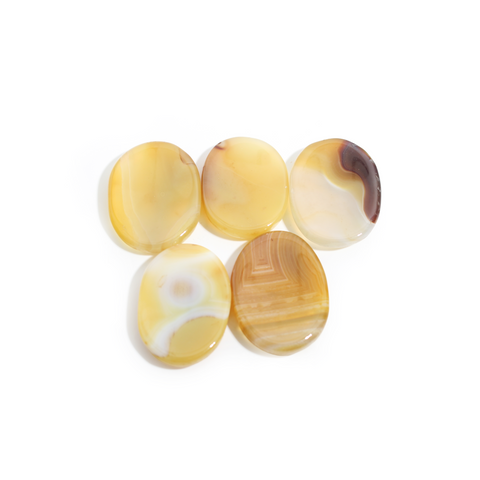
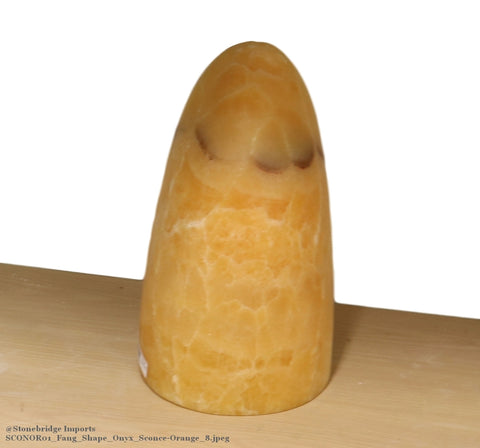
The second onyx is a different mineral. "Onyx marble", also sold as Mexican, Pakistani, yellow, orange or zebra onyx, is banded calcite or aragonite that formed in caves and around springs. It is soft, glows when light shines through it, and is carved into lamps, bowls, sconces and worry stones.
For a shop, the split is useful to know. Chalcedony onyx is hard enough for beads, bracelets and tumbled stones that get handled all day. Onyx marble is a display and gift stone that needs a little more care.
Hard onyx is quartz. Soft onyx is calcite. Both are sold under the same name.