



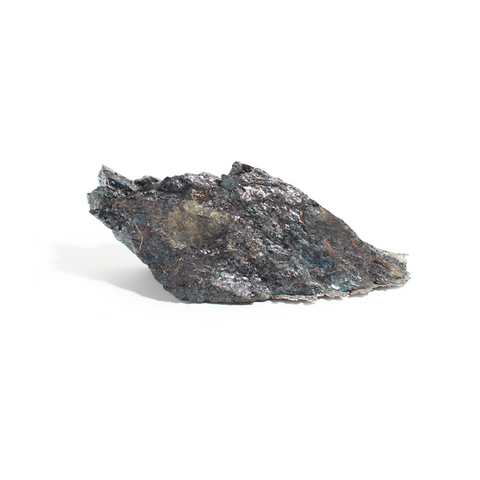


Pyrite: fool's gold with perfect corners
A common iron mineral that grows cubes so neat they look machined, and has fooled prospectors for centuries.
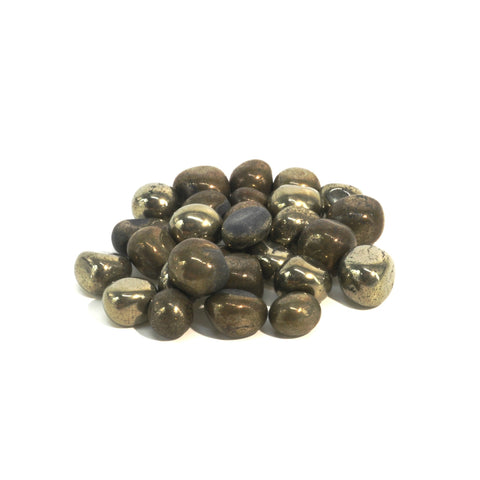
Pyrite is iron sulphide, one of the most common sulphide minerals in the Earth's crust. Its name comes from the Greek word for fire, because a piece struck against steel or flint throws sparks. Its nickname, fool's gold, comes from the brassy shine that has sent many prospectors home disappointed.
Telling the two apart is simple once you know how. Gold is soft and bends; pyrite is hard and brittle and shatters if you hit it. Rub pyrite across unglazed porcelain and it leaves a greenish-black streak, where gold leaves a gold one. And pyrite is far more common.
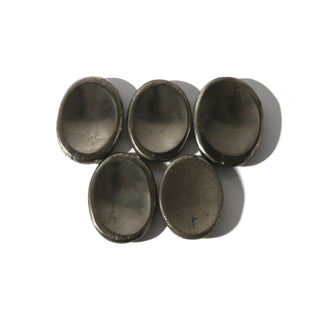
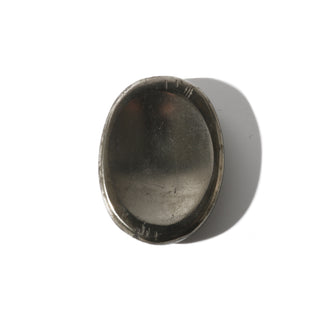
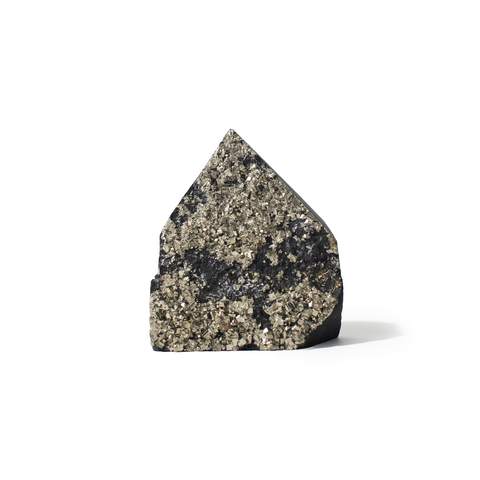
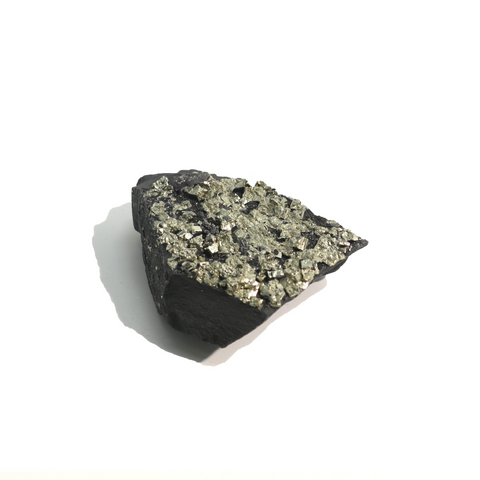
Pyrite is famous for its crystal shapes. It grows as cubes with flat, mirror-like faces, as twelve-sided crystals called pyritohedrons, and as glittering crusts of small crystals on rock. Our pyrite on basalt is the last kind, sparkling crystals spread over dark volcanic rock.
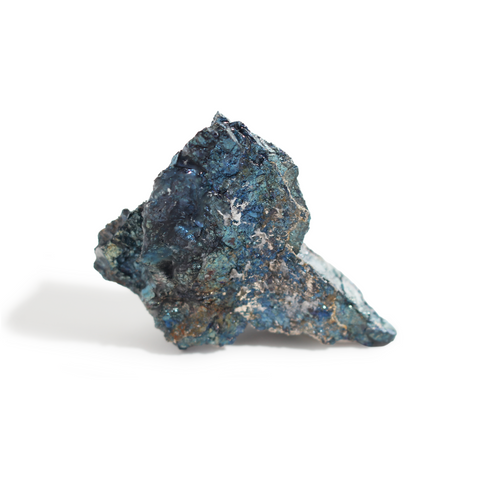
Its close relative chalcopyrite is copper iron sulphide, one of the world's main copper ores. The Sudbury Basin in Ontario is one of the great nickel and copper mining districts on Earth, and our Silver in Chalcopyrite specimens come from there. For a Canadian shop, that local story is a strong reason to stock them.
Gold bends. Pyrite shatters. That is the oldest test in prospecting.