



Jade: two minerals and one name
The stone carved for thousands of years is really two different minerals, and Canada is one of the world's great sources of one of them.
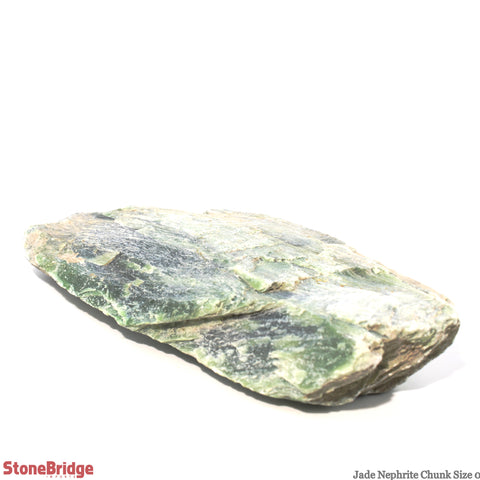
Jade is not one mineral. Nephrite is a member of the amphibole group, made of tremolite and actinolite. Jadeite is a pyroxene. The two were only told apart in 1863, after centuries of being treated as the same stone. Both are sold as jade today.
What they share is toughness. Hardness is how well a stone resists a scratch. Toughness is how well it resists breaking. Nephrite is a dense felt of tiny interlocking fibres, so a blow that would shatter quartz just bounces off. That is why jade was used for axe heads and tools long before it was carved into ornaments.
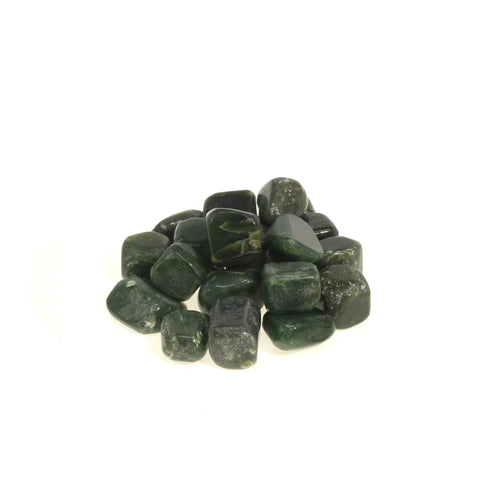
Canada matters here. British Columbia holds some of the largest nephrite deposits in the world, and jade is BC's official gemstone. Much of the nephrite carved and sold around the world has come from northern BC, so for a Canadian shop jade has a home-grown story even when a particular piece comes from elsewhere. Our tumbled nephrite, for example, is from Pakistan, as its title says.
The jewellery trade also uses the word jade for stones that are neither nephrite nor jadeite. Xinshan jade is serpentine. Many brightly coloured jade beads are dyed quartzite or dyed marble. These can be good stones to sell, as long as the label says what they are.
Hard to scratch is one thing. Hard to break is jade.